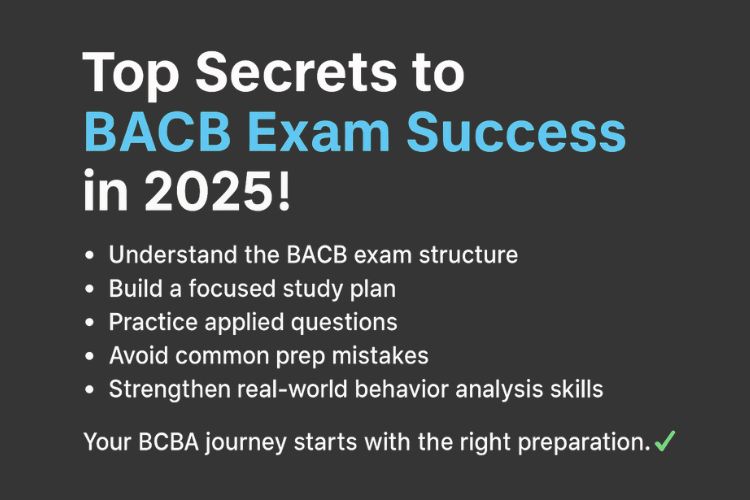

To become a board-certified behavioral analyst (BCBA), you must pass the BCBA certification, which is actually a BACB exam.
The last step in becoming a certified BCBA is passing the test.
The goal of this test, according to the Behavior Analyst Certification Board (BACB), is to ensure that everyone who wants to work as a BCBA has entry-level behavior analyst expertise.
For those who wish to improve the lives of millions of individuals with autism and their caretakers, becoming a BCBA or Board Certified Behavior Analyst is a significant milestone. An essential element in this process is the BCBA certification Exam, which evaluates the knowledge and abilities needed to work as a certified behavior analyst. A summary of the BCBA exam, its importance, and the advantages of becoming a BCBA are given in this blog.
Additionally, most of the individuals confuse between and BCBA. So, we will also explain the difference in this blog.
Therefore, keep reading and exploring to learn what is a BCBA? And we will also explain how to become a BCABA in 2025 and beyond.
What is a BCBA?
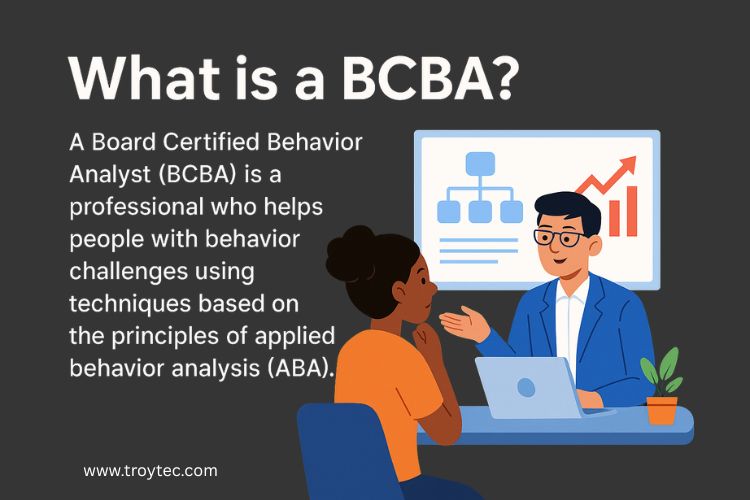
The BACB or Behavior Analyst Certification Board administers the BCBA Exam, a thorough evaluation. It assesses the proficiency of those aspiring to become Board Certified Behavior Analysts.
Multiple-choice questions (MCQs) covering a variety of topics, such as evaluation, intervention, behavior modification, ethical issues, and research methodologies, make up the test. Those who pass the BCBA Exam, which is organized by BACB, show that they comprehend and can use behavior analysis concepts in practical situations.
A minimum score of 400/500 is required for applicants to pass the BCBA Exam. As the BACB reviews and modifies the passing standards on a regular basis, the passing score may change.
All of the major domains and subject topics included in the test blueprint are covered in the test. Providing a thorough overview of behavioral analytic concepts, principles, and applications, it assures a secure knowledge basis. The manual gives thorough and easy-to-understand descriptions, real-life illustrations, and practical hints, all of which contribute to effective learning and retention.
To assist people in successfully completing the test, the BCBA Board Certified Behavior Analyst Exam Preparation Guide also offers test-taking techniques and advice. It ensures that applicants are prepared and self-assured on test day by acquainting them with the format, structure, and types of questions.
Why is the BACB Exam Important?
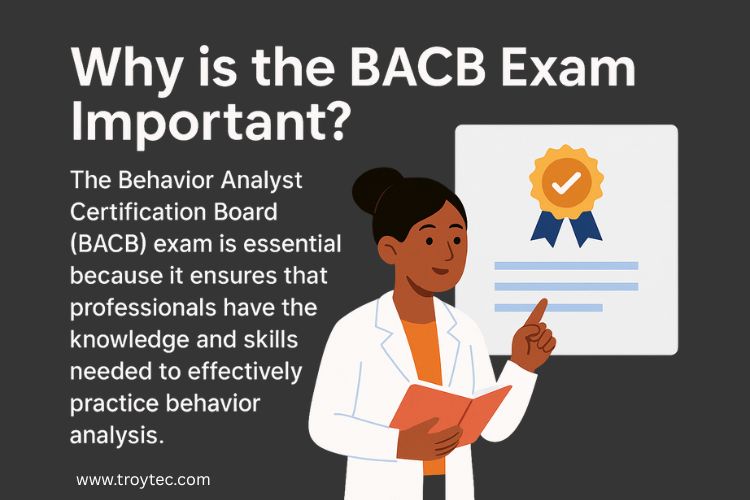
Numerous options in the field of applied behavior analysis are made possible by becoming a BACB. You have the knowledge and talents required to offer people with autism and other developmental disorders evidence-based therapies and support as a BCBA. This BCBA certification increases your professional reputation with coworkers, employers, and clients, in addition to validating your skills.
The following are some main advantages of getting a BCBA:
-
Greater Career Prospects
Becoming a BCBA significantly increases your employment chances because there is a growing need for behavior analysts. Clinics, schools, hospitals, and private practices are just a few of the places you can work. This exam is one of the best exams that come with fantastic career opportunities.
-
Increased Potential for Earnings
Higher earning potential is frequently correlated with BCBA qualification. You may negotiate better pay and assume leadership positions in firms as a trained behavior analyst.
-
Effective Work
You have the chance to significantly improve the lives of millions of individuals with autism and their families as a BCBA. Your expertise in BACB behavior analysis can help them gain new skills and enhance their quality of life.
-
Professional Development
Continuing education and professional development are necessary to keep your BCBA certification. This dedication to lifelong learning guarantees that you remain current with the most recent findings and industry best practices.
Understanding the format of the BACB exam and developing a study strategy that works for your schedule and learning preferences are crucial for successfully preparing for the BCBA Exam. We will go into more depth about these elements in the next section, offering helpful advice and insights to assist you in achieving.
How Students Get Confused Between BACB and BCBA?
Because BACB and BCBA are used so frequently that they become synonymous, students commonly confuse the two words. Although both are essential to the profession of Applied Behavior Analysis (ABA), they stand for two very distinct things: the certification itself and the certifying organization. This overlap naturally leads to confusion when new students start looking into ABA certification, particularly when the acronyms are used loosely in study materials and internet sources.
Here are the reasons why Students Mistake BCBA for BACB:
- Similar Acronyms: Because both terms have the same letters, it’s simple for novices to confuse them.
- Organization vs. Credential: BCBA is the certification that students are attempting to get, whereas BACB is the certifying board.
- Online Terminology Misuse: A lot of websites, discussion boards, and study groups refer to the “BACB exam” rather than the “BCBA exam,” which leads to miscommunication.
- Frequent Pairing in Documents: Students frequently encounter BCBA work lists, BACB ethics, and BACB accounts in the same process, which causes overlap.
- Several Credentials Under Board: Since the BACB is in charge of many certifications (RBT, BCaBA, and BCBA), it is reasonable to believe that BACB refers to BCBA in particular.
- Early Learning Stage Confusion: New applicants frequently do not yet understand the distinction between the duties of the board (BACB) and the certification (BCBA).
How to Become a BCABA With Flying Colors?

Having a strong study strategy in place is crucial to refining your chances of passing the BCBA test. This section will help you comprehend the format of the BACB test and develop a customized study schedule.
-
Recognizing The Format Of The BCBA Exam
It’s crucial to become familiar with the format of the BCBA test before beginning your study preparations. The 150 multiple-choice questions on the test are intended to evaluate your knowledge and comprehension of behavior analysis topics and principles. Measurement, evaluation, intervention, ethical issues, and professional behavior are just a few of the topics covered in the test.
You must have a minimum passing score in order to pass the BCBA test. Standard-setting is the technique used to calculate the passing score for the test, which might change from administration to administration.
-
Making A Study Schedule
To successfully cover every topic area on the BCBA certification, a well-structured study strategy is essential. You may make a study plan that works for your schedule and learning style by following these steps:
- Evaluate your advantages and disadvantages: Determine the subjects that need more study and the areas in which you are confident. You’ll be able to manage your study time with this self-evaluation better.
- Split up the time you spend studying: Divide the BCBA exam’s subject topics into doable study periods. Make sure you cover all the information by allocating specific time periods for each topic area.
- Collect research resources: Gather the required study materials, such as internet resources, reference materials, and textbooks.
- Establish clear objectives: To stay motivated and on BACB course, set daily or weekly goals. For example, you can set a deadline for finishing a certain number of practice questions or chapters.
- Make a study plan: Make a study plan that works for you using a planner or calendar. Set aside a particular time each day for studying, and make every effort to adhere to the plan.
- Practice with sample questions: Include practice questions in your study schedule to gauge your comprehension of the subject matter and acquaint yourself with the structure of the test.
- Seek assistance and join study groups: Take into consideration joining study groups or asking other people who are getting ready for the BCBA test for assistance. Working together with others may provide you with a variety of viewpoints and strengthen your comprehension of the subject.
When studying for the BCBA test, keep in mind that dedication and consistency are crucial. You may approach your preparations with confidence and raise your chances of triumph by comprehending the framework of the test and developing a well-organized study strategy.
Typical Errors to Avoid When Preparing for the BCBA Certification
It might be challenging to study for the BCBA test; therefore, it’s critical to steer clear of particular typical blunders that could impede your progress. When preparing for the BACB test, steer clear of these typical blunders:
-
Putting Off Studying For Too Long
Waiting too long to begin preparing for the BCBA test is one of the most common errors students make. It’s crucial to give yourself enough time to properly examine all of the content because this test demands a lot of preparation.
-
Prioritizing Memorization Over Comprehension
Students may make the error of concentrating too much on memorization rather than comprehension. Understanding how concepts and principles apply in real-world circumstances is much more vital than memorizing.
-
Insufficient Practice Of Applied Questions
The BCBA exam’s applied portion discusses the practical applications of behavior analysis concepts. Instead of practicing applicable problems, many students concentrate primarily on fundamental ideas and concepts. They could thus find this portion of the test difficult.
-
Ignoring Self-Care
It’s simple to overlook self-care practices like working out or spending time with loved ones when preparing for the BCBA test. But to stay motivated and focused throughout extended BACB study sessions, you must take care of yourself.
-
Ineffective Use Of Study Groups
If appropriately used, joining a study group may be a valuable strategy for getting ready for the BCBA test. Instead of concentrating on going over material together, some students utilize study groups as a social outlet.
Conclusion
Aspiring behavior analysts might get essential insights from a thorough grasp of the dynamics of the BACB BCBA test success rates. First-time success is influenced by a variety of factors, including the caliber of educational programs and good study habits.
You may significantly increase your chances of passing the test on your first try by arming yourself with the appropriate information and study techniques. Most people confuse BACB and BCBA. However, in this blog, we’ve explained in depth that the BCBA is the credential, while BACB is the organization that issues the credential.
FAQs (Frequently Asked Questions)
Why Do So Many People Fail The BCBA Exam?
A lack of knowledge in the area and comprehension of behavior analysis is the reason why so many people fail the BCBA test. Many people who have trouble passing the test don’t devote nearly as much time to concentrated study as they should.
How Many Questions You Need To Pass The BCBA Exam?
At least 114 out of 150 questions, or a 76% score, must be answered correctly to pass the BCBA test.
Can You Use A Digital Calculator On The BCBA Exam?
Indeed, you can use a calculator on the BCBA test if needed.
